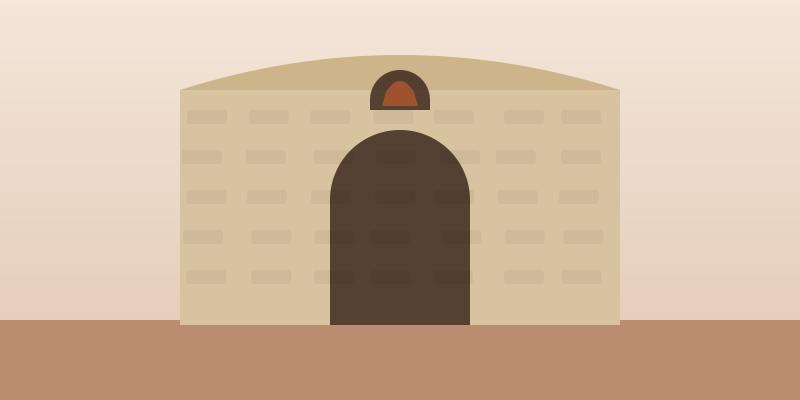
Old industrial buildings are full of clues about how and when they were built, what they were used for and how they changed over time. You do not need to be an architect to read them. This guide introduces a handful of details that appear again and again in late nineteenth- and early twentieth-century brick buildings, including many in San Antonio, and explains what each one can tell you.
Start with the brick itself
Brick color and texture vary with the clay, the firing and the period. Older bricks are often less uniform than modern ones, with small variations in size, edges and tone. A wall that changes color or texture partway up, or across a section, may show where a building was extended, repaired or altered. Look for patches where bricks are newer, sharper-edged or set in a different mortar.
Brick bonds
The pattern in which bricks are laid is called the bond. A few common ones:
- Running (stretcher) bond: every brick shows its long side. Common in later walls and in brick veneers.
- Common (American) bond: several rows of long sides, then a row showing the short ends (headers) that tie the wall together. Typical of many solid, load-bearing brick walls.
- Flemish bond: long sides and short ends alternate in the same row, creating a decorative checkerboard effect, often on more formal facades.
Header rows suggest a solid wall several bricks thick, which is typical of heavy industrial buildings.
Arches over openings
Before steel beams were widely used, arches carried the weight of the wall over windows and doors. Watch for:
- Segmental arches: shallow curves, very common over factory windows.
- Round (semicircular) arches: a full half-circle, often used for emphasis on main entrances or tall windows.
- Flat arches: bricks set in a fan shape that looks almost straight.
Rows of identical arched windows are a classic signature of industrial buildings from this era.
Cornices, corbels and parapets
At the top of a wall, builders often added decoration even on working buildings. Corbelling is brickwork that steps outward row by row, creating shadow lines and patterns. A cornice is a projecting band along the top, and a parapet is the part of the wall that rises above the roofline. These features helped a company present a solid, prosperous image to the street.
Towers and tall elements
Breweries in particular were often tall, because traditional brewing moved ingredients downward by gravity through each stage of the process. That is one reason brewhouses frequently have a tower-like form that stands above the surrounding buildings. Chimneys and smokestacks, sometimes kept after the boilers are gone, are another landmark.
Iron, steel and signs of machinery
Look for metal tie-rod ends or decorative plates on exterior walls; these anchor internal rods that help hold walls together. Inside, steel trusses, riveted beams and cast-iron columns hint at the loads the building was built to carry. Rails, hooks, pulleys and old pipework show where goods and machinery once moved.
Ghost signs and painted lettering
Faded painted advertisements and company names, often called ghost signs, survive on many old brick walls. They are a direct link to the businesses that once used the building and are often preserved during renovation.
Old and new together
In adaptive reuse projects, modern additions are often designed to contrast with the historic fabric: glass, steel and smooth panels set against old brick. When you see a crisp new insertion next to a weathered wall, you are usually looking at a deliberate design choice. Our article on adaptive reuse explains why.
Try it at the Pearl
The Pearl's surviving brewery buildings are a good place to practice. Pick one facade and look for its bond, its arches, its cornice and any signs of change. Then compare it with a newer building nearby. Our architecture tour suggests a route, and the gallery shows more of the district.
Before you go
A small pair of binoculars or a phone camera with zoom makes upper-floor details much easier to see. Please stay on public paths and respect private and residential spaces.
The Historic Pearl is an independent guide and is not affiliated with Pearl, Silver Ventures or any business in the district. For current hours, events and access, check the official Pearl website or the individual venues.
Updated October 17, 2026.